Drilling
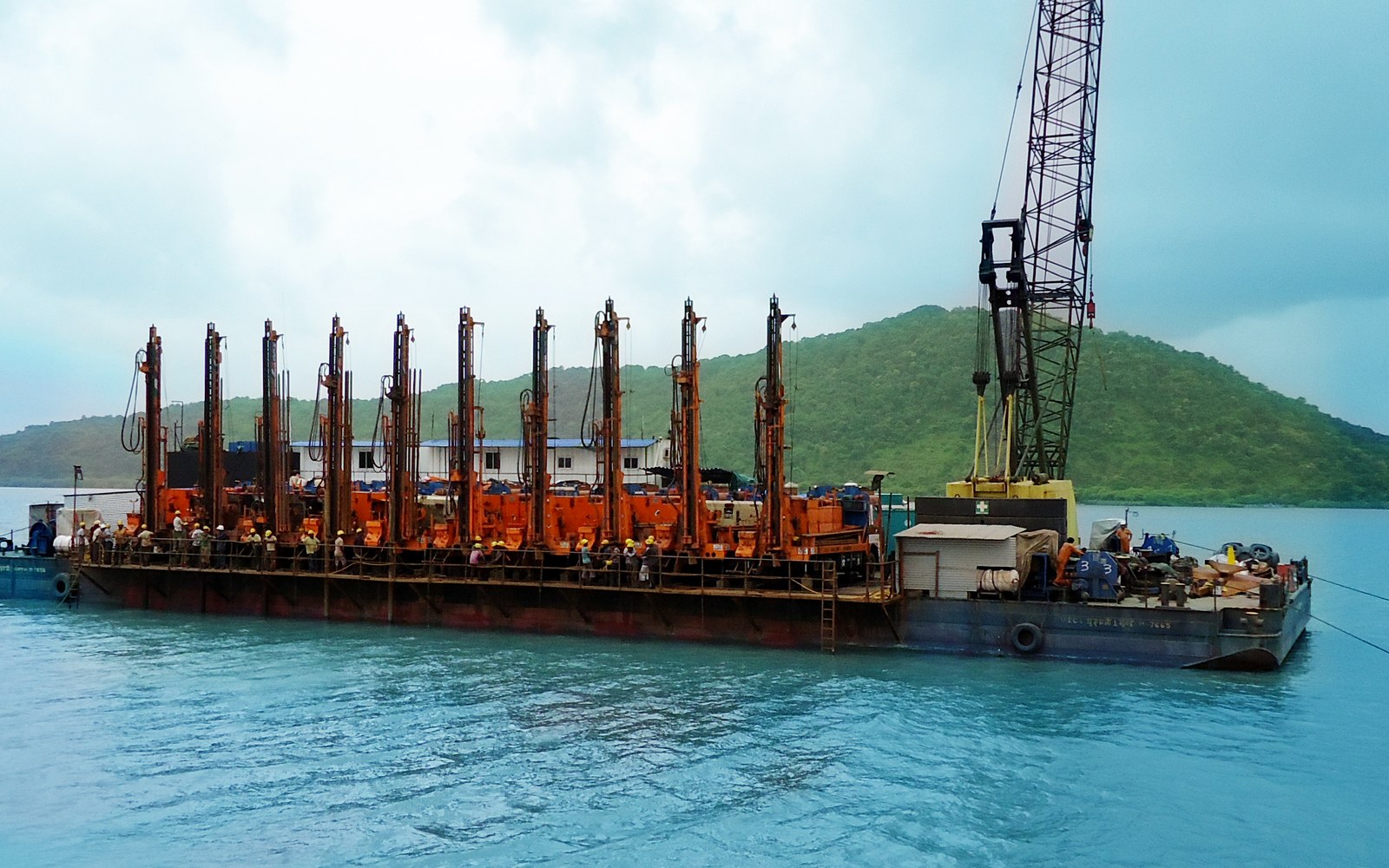
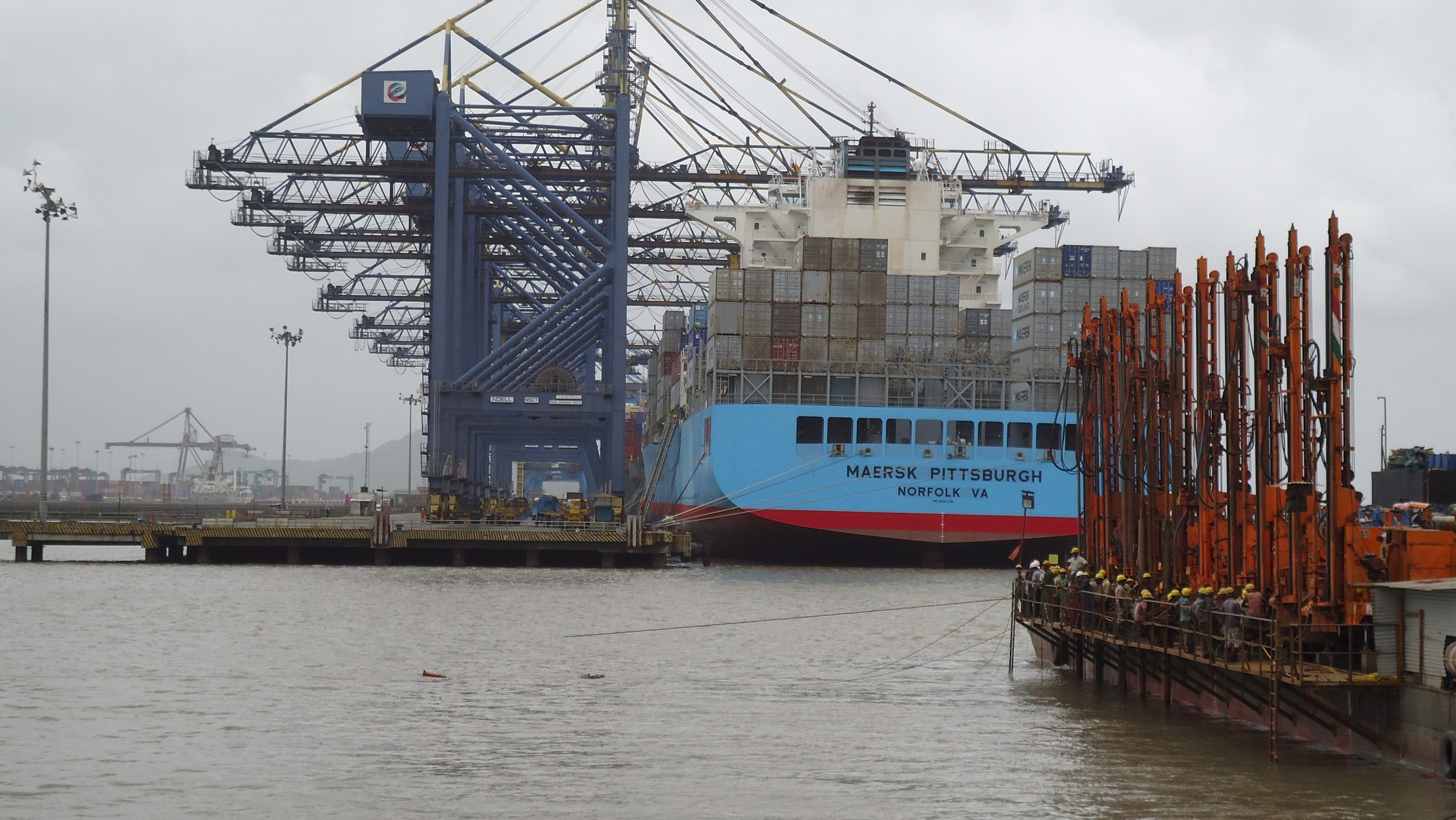
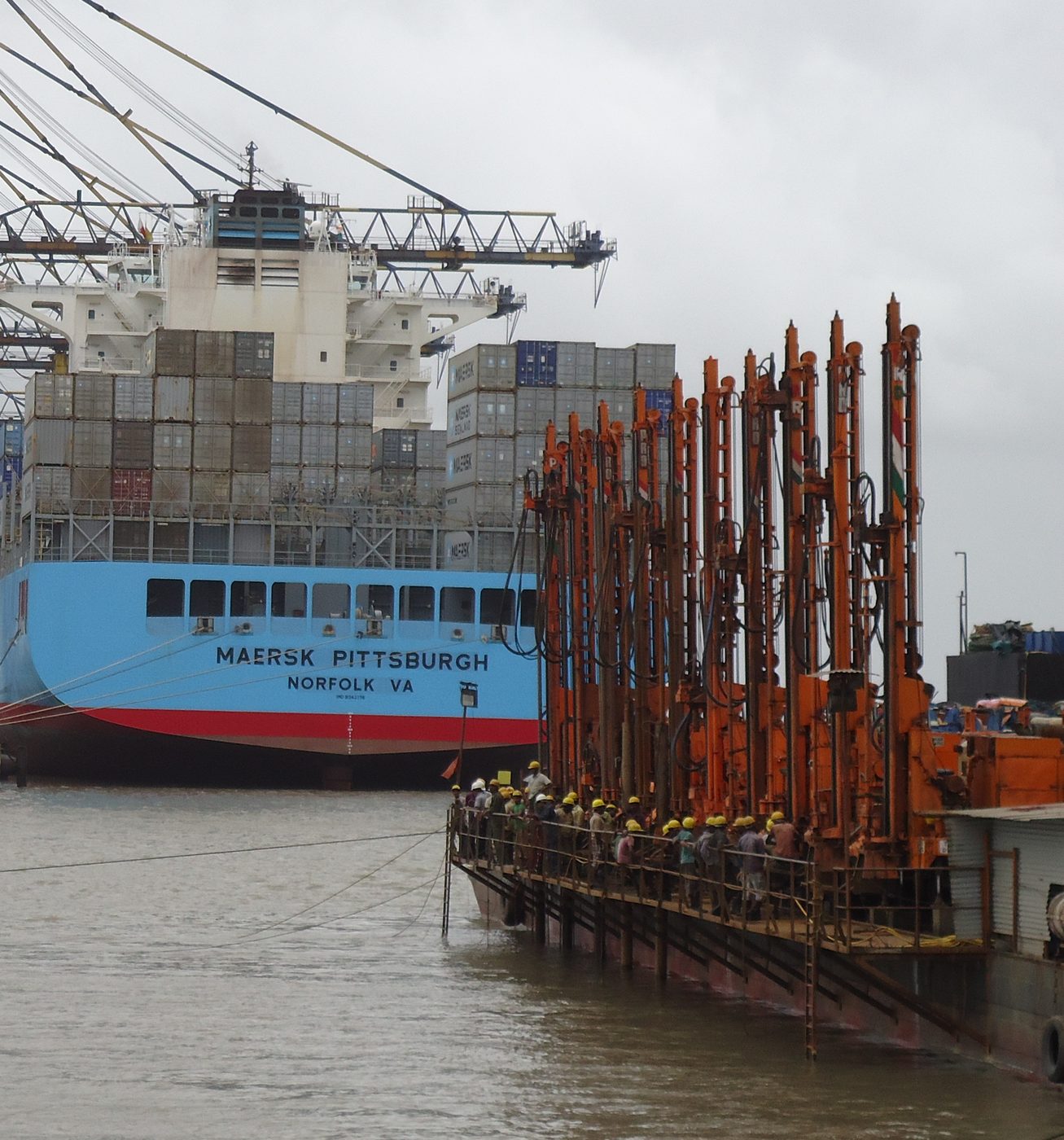
DTH drill rigs on our anchored barge drill through casings seated on the seabed rock, down to the design depth, eight holes at a time.
Underwater drilling and controlled blasting for port deepening, navigation channels, berth pockets and capital dredging, delivered by our drill & blast team.
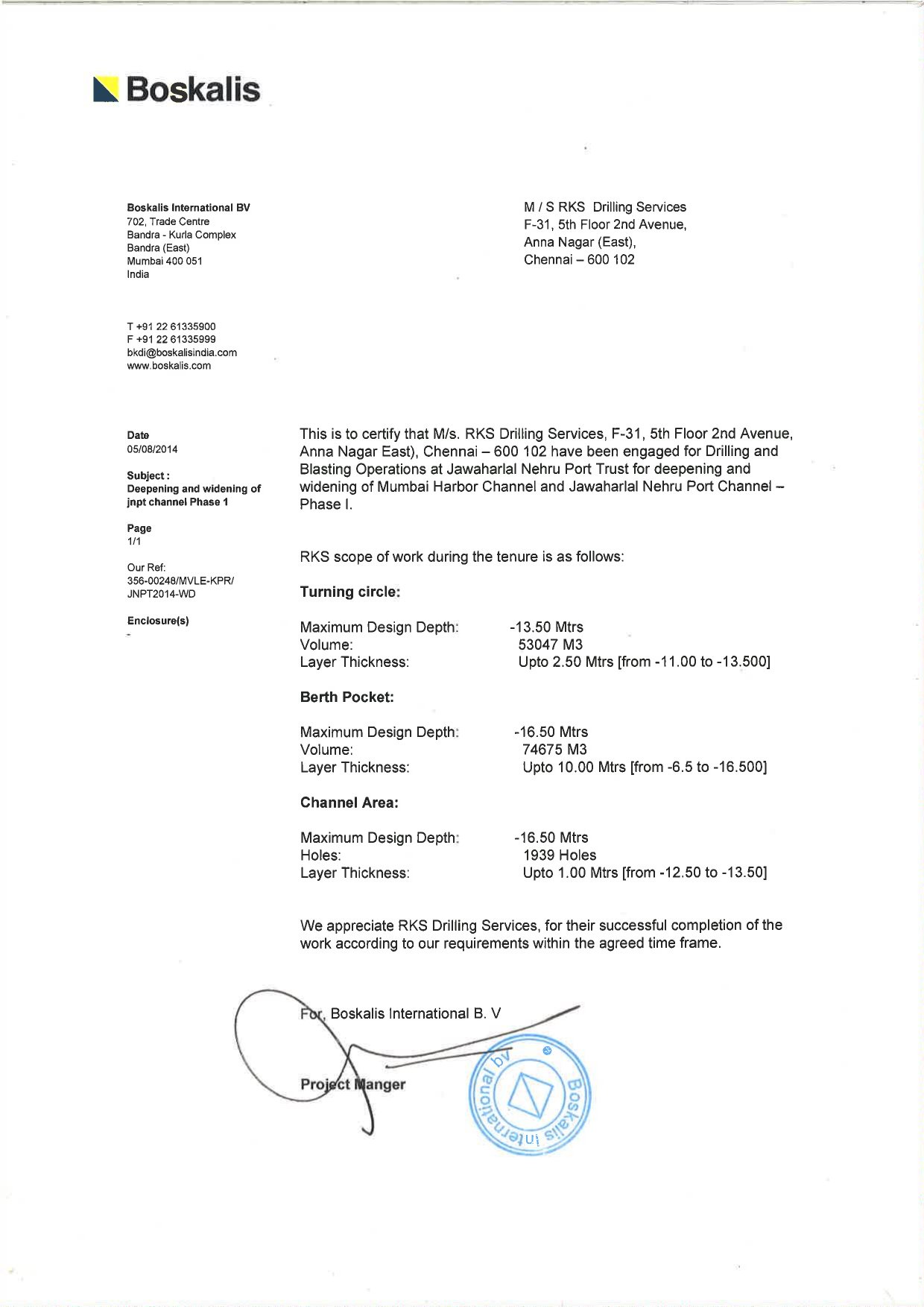
Certified by Boskalis International B.V. for drilling and blasting on the deepening and widening of the Mumbai Harbour and JNPT channel, Phase I, completed within the agreed time frame.
View the certificate →We are a specialty contractor for marine and land-based projects. Our core strength is underwater drilling and controlled blasting, with the design, equipment and crews to deliver it at scale.
Rock removal under water for dredging contractors and port authorities, designed so the blasted rock suits the dredger you deploy.
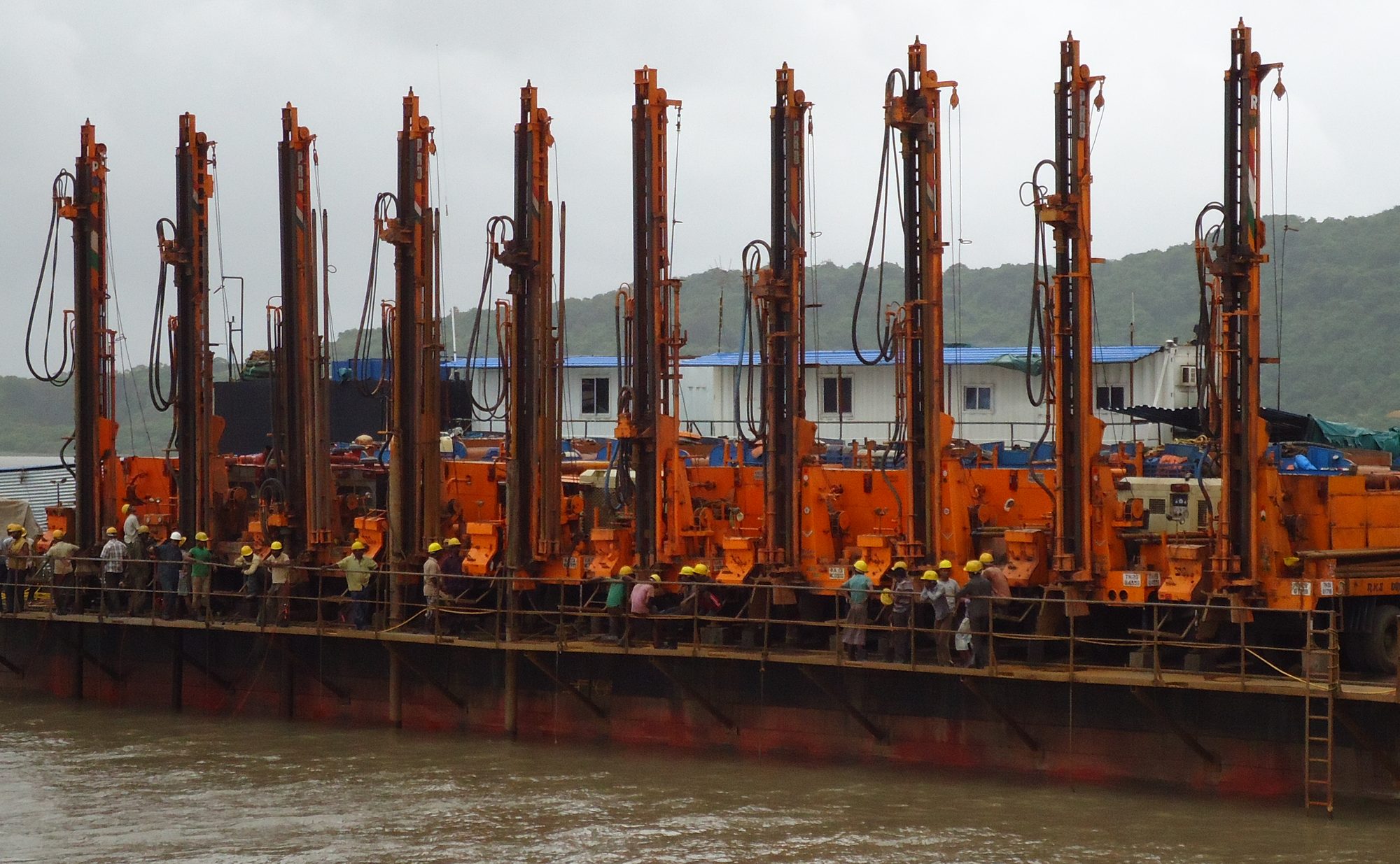
DTH drill rigs on our anchored barge drill through casings seated on the seabed rock, down to the design depth, eight holes at a time.
Calculated explosive charges fired on timed delays to control ground vibration and fly-rock, with vibration monitored on every blast. At Jaigad Port we held vibration to 2 mm/s.
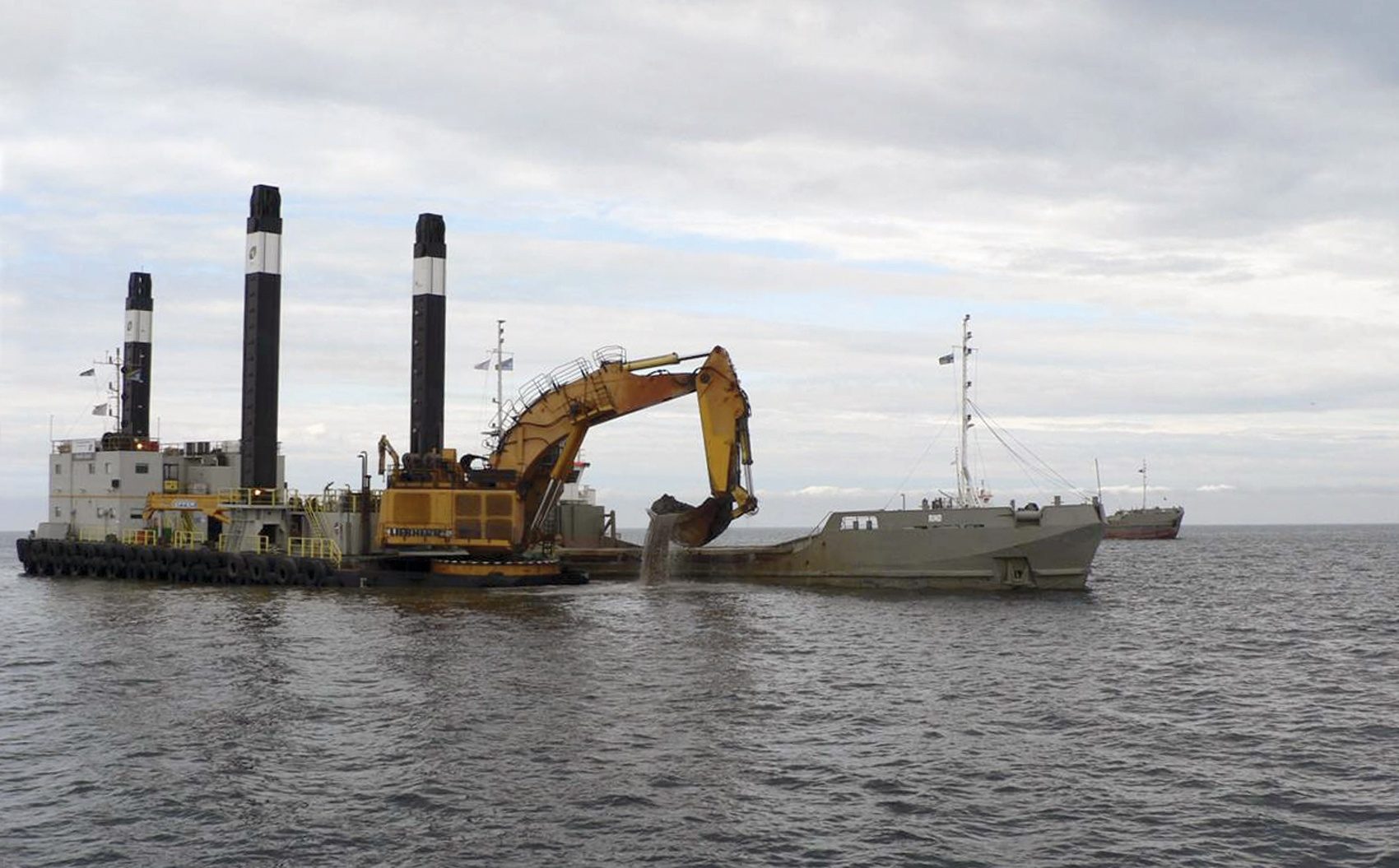
The broken rock is removed by the dredger. Our blast design sizes the fragments to suit the dredger on site.
A simplified cross-section of how our barge drills, charges and blasts rock below the seabed. The project video below shows the full operation.
Survey experts mark DGPS coordinates for each drilling location.
The drill barge, with built-in GPS, is anchored on the marked coordinates.
After the dredging contractor removes overburden, casing is seated on the hard rock so loose material cannot collapse into the hole.
Drill rods with a DTH hammer and bit go down the casing and drill to the design depth.
Calculated charges are placed in 30 to 40 holes. The barge moves clear, the siren sounds and all holes fire on delays, with vibration monitored.
The dredging contractor removes the broken rock, for example to a crusher.
Our drill & blast barges work in any tide, wave or weather condition. Eight truck- or skid-mounted DTH drill machines on each barge drill eight holes at once, and special devices on the rigs hold a constant pressure on the bottom of the hole against wave movement.
A 2.0 m working deck runs along one side. Winches and anchor wires run on hydraulic, diesel or electric power, and high masts cut down on rod changes.
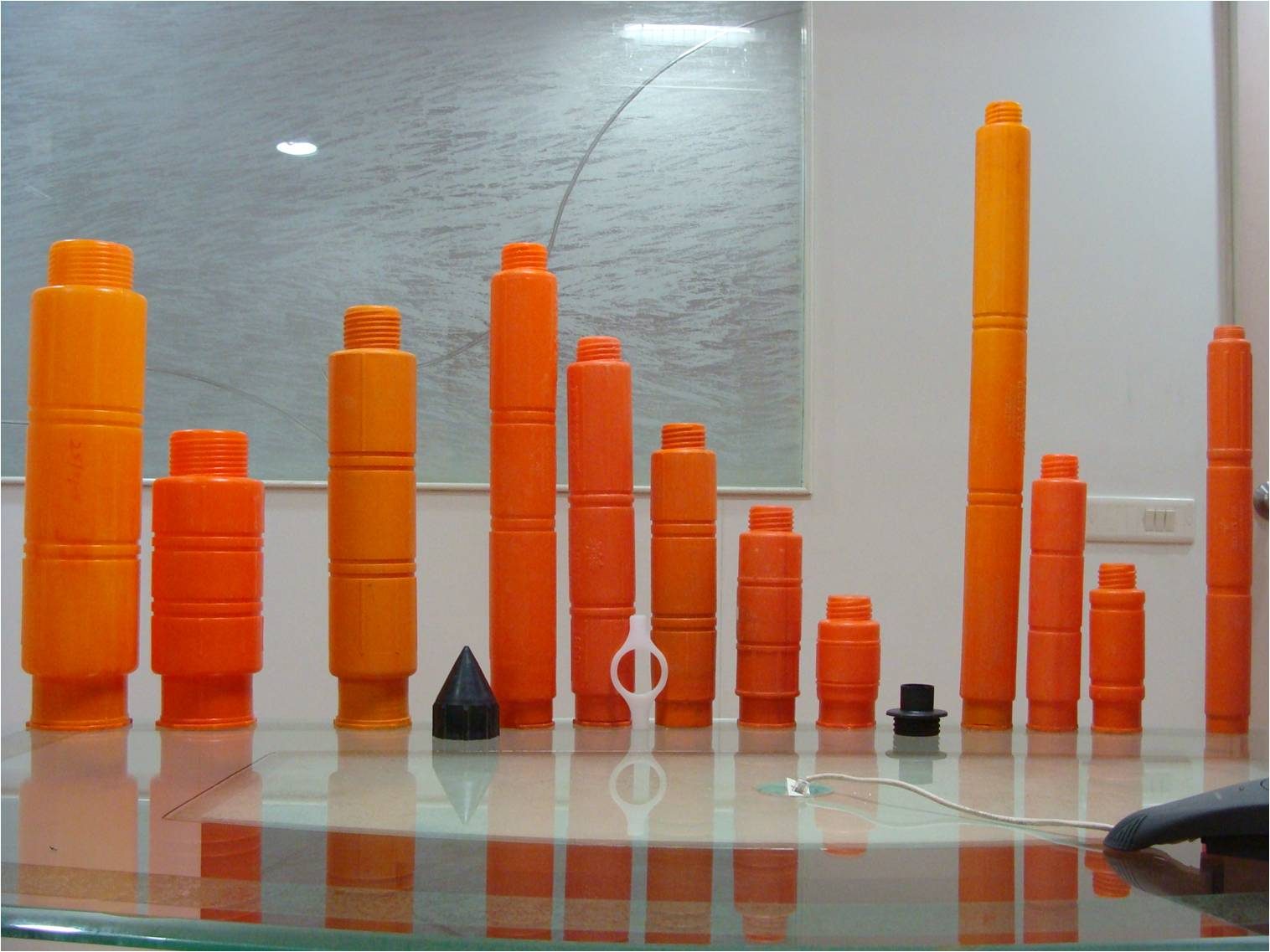
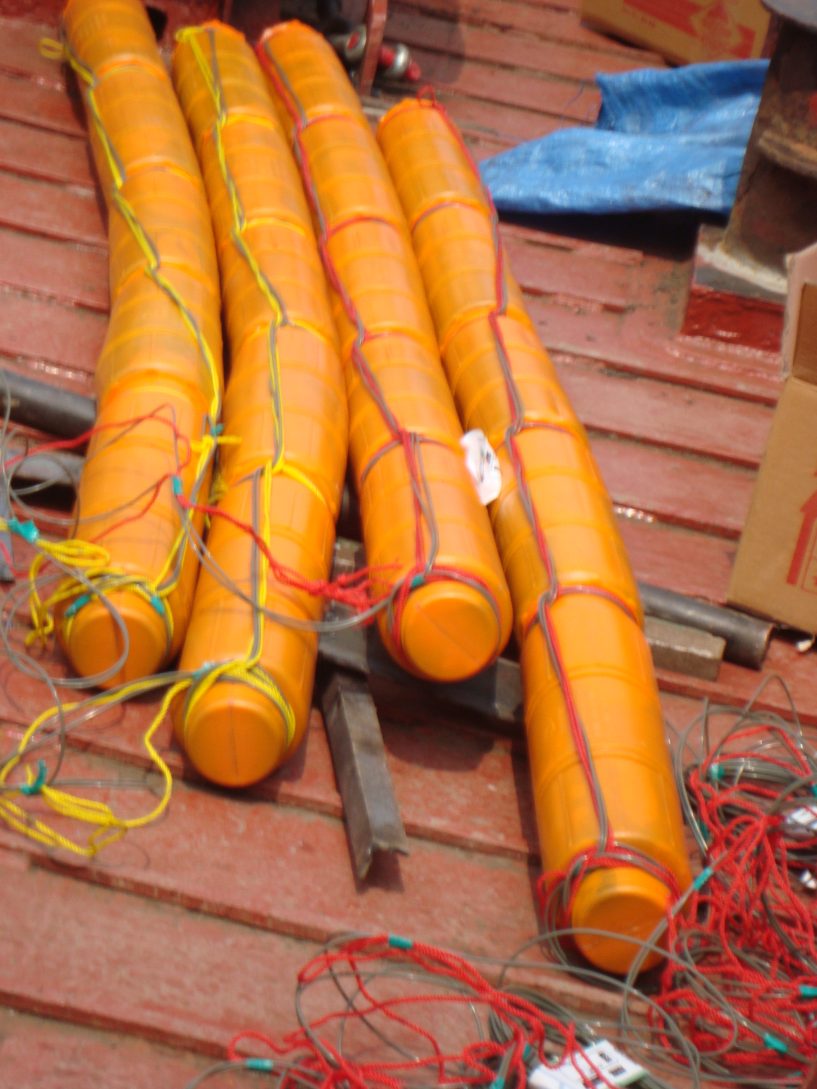
We use KELVEX-P water-gel explosives in couplable plastic tubes. The cartridges couple directly into a charge column, sink in water-filled holes, and are fired with non-electric shock-tube detonators.
| Type | Nitrate-mixture water gel, Class 2 (Explosives Act) |
| Cartridges | 76, 100 and 125 mm diameter (125 mm × 6.25 / 3.125 kg) |
| Velocity of detonation | 4,750 – 5,500 m/s |
| Water & hydrostatic resistance | Holes up to 50 m deep |
| Bulk strength | ~1,040 cal/cc, does not float in the hole |
Founded in 2001 in Chennai, RKS Drilling Services has built a reputation for excellence across India's mining and infrastructure industry, and has carried out underwater drilling and blasting since 2002.
Client: Boskalis International B.V. Turning circle, berth pocket and channel area to −16.5 m.
Client: Jaisu Shipping Co. Deepening from −12 m to −14 m.
Client: Jaisu Shipping Co. Rock excavated at 9 to 16.5 m depth, with controlled blasting to protect the Naval Dockyard and existing Mumbai Port Trust berths. Blast design prepared and monitored by Anna University.
For Rock n Reef. Controlled blasting at 7 to 12.5 m depth with fragments sized for a 5 m³ backhoe dredger, protecting a jetty under construction about 400 m away and nearby villages.
Client: Jaisu Shipping Co. Berth deepened from −8 m to −12.2 m, blasting close to port infrastructure and culturally sensitive sites.
To be the premier drilling and blasting contractor in India, and to become a leading global provider of frontier rock breaking in underwater drilling and blasting, mining, construction and allied industries.
To deliver quality, time-bound, sustainable services using state-of-the-art, safe and environmentally friendly methods, with competent people working under expert guidance.

Department of Mining Engineering, College of Engineering Guindy, Anna University, Chennai. Their experts prepare and monitor our blast designs on major port projects.
Two decades of underwater rock removal at India's busiest ports, completed on schedule and certified by the contractors we worked for.
Boskalis, one of the world's leading dredging and marine contractors, engaged RKS for drilling and blasting on the deepening and widening of the Mumbai Harbour Channel and the Jawaharlal Nehru Port Channel.
"…successful completion of the work according to our requirements within the agreed time frame."Project Manager, Boskalis International B.V., 5 August 2014
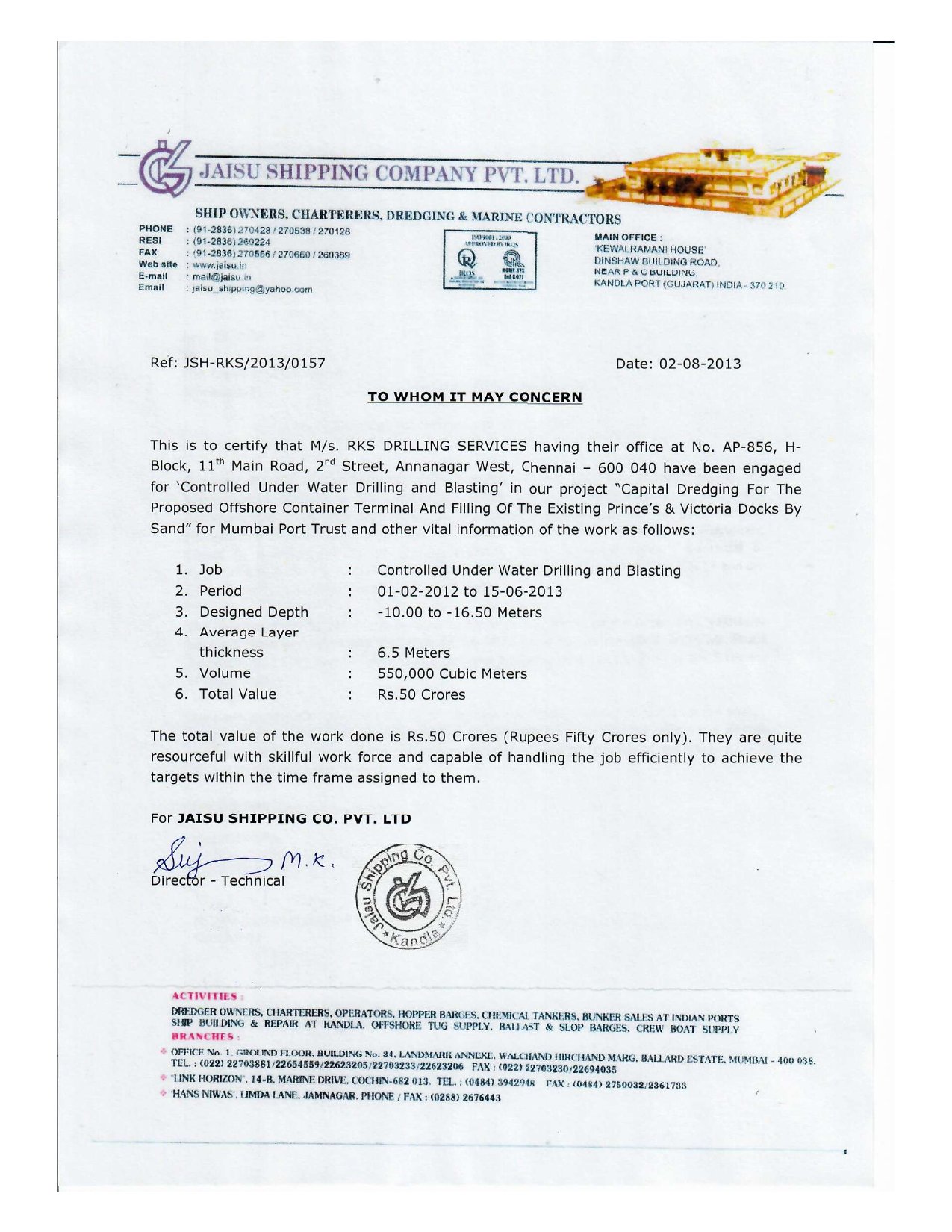
Underwater drilling and controlled blasting for capital dredging of the proposed Offshore Container Terminal, Mumbai Port Trust.
Ports & marine
Mining
Positioning, drilling, charging, blasting and dredging, filmed on site.
We provide and maintain a safe, healthy workplace for everyone on site. Management leads on occupational health, safety, fire protection and loss control, and every person on site is responsible for their own safety.
Our blasting crews receive continuous company training plus the safety training required by DGMS. We follow mines safety rules, environmental rules and all applicable government regulations.
Zero lost-time accidents is our goal, with superior safety and occupational health management.
Ground vibration from every blast is monitored and kept within agreed limits.
The barge moves clear and a siren warns the area before every blast.
Holes fire on timed delays rather than all at once, which lowers peak vibration.
Class 2 water-gel explosives in temporary stores on the barge, prepared at a dedicated charging station.
Every port project has a Disaster Management Plan led by an Emergency Coordinator and an Emergency Committee, which meets regularly to review roles, training, drills and updates.
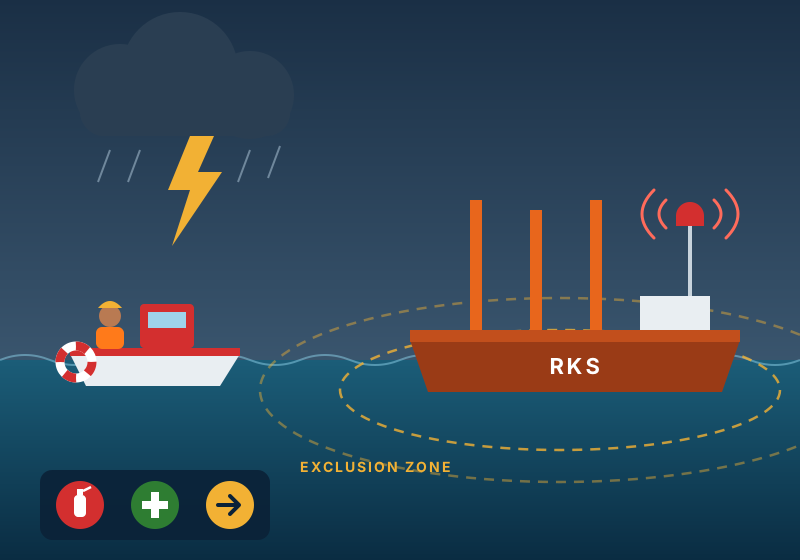
Can damage equipment and halt work at sea.
Hover for the plan +Can start anywhere on the barge and damage equipment.
Hover for the plan +Can happen without warning and needs a fast, coordinated response.
Hover for the plan +Emergency Committee on standby, storm tracked, vessel captain alerted, checklists and crew lists prepared.
Vessels leave for safe harbour or are secured at the designated port. Shelter identified for barge crew.
Checklists issued to section heads, final preparations made and evacuation of employees completed.
Declared by port authorities. Committee surveys the site and reports damage with photographs.
The barge carries its own fire-fighting equipment: sea-water pumps with flexible hoses, and multi-purpose Class ABC dry-chemical extinguishers at generators, electrical panels, corridors and maintenance areas.
Send us your site details, rock type, design depth and volume, and we will get back to you with a plan.
RKS Drilling Services
AP-856/51, 2nd Street, H-Block,
11th Main Road, Anna Nagar West,
Chennai 600 040, Tamil Nadu, India
Mr. R. Ramesh, Chief Executive Officer
Odisha · West Bengal · Jharkhand · Tamil Nadu